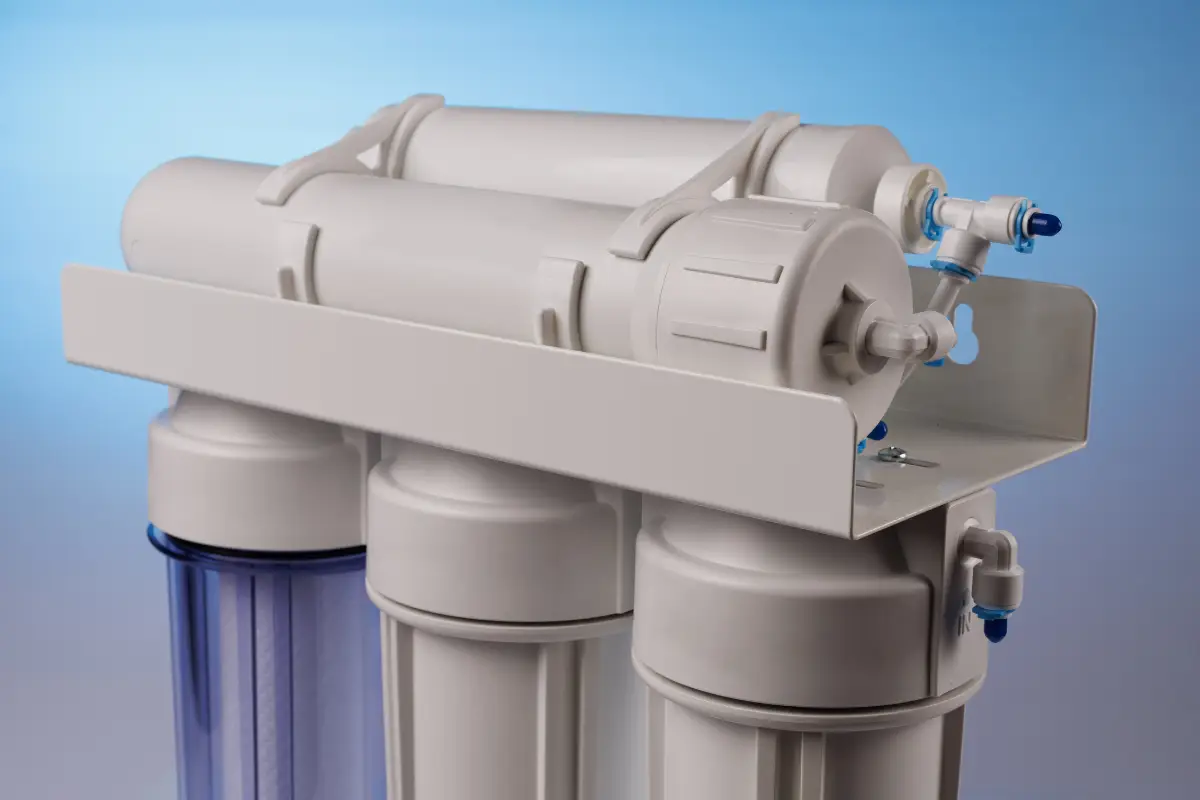
RO stands for Reverse Osmosis. RO water goes through a reverse osmosis filtration process in which high pressure pushes water through a membrane with extremely small pores (about 0.0001 micron), smaller than germs, bacteria, viruses, chemicals, and heavy metals. The result is pure water that is up to 99.99% free of contaminants.
Table of Contents
The RO Filtration Process
- Raw water passes through the coarse sediment filter: Filters out sediment, debris, rust, and large dust particles
- Water passes through the granular carbon filter: Absorbs chlorine, organic compounds, chemicals, unpleasant odors, and color
- Water passes through the resin filter: Conditions the water through ion exchange, filtering out limescale and dissolved heavy metals
- Water passes through the RO membrane: Filters out tiny contaminants such as germs, bacteria, viruses, chemicals, heavy metals, etc.
- Water passes through the carbon block filter: Improves the water’s taste, odor, and color
Properties of RO Water
- Pure and free of contaminants
- No minerals
- Flat taste
- Safe for your health
Benefits of RO Water
- Ideal for people who want clean, pure, contaminant-free drinking water
- Suitable for people with health conditions such as kidney disease or heart disease
- Suitable for young children
- Suitable for cooking
- Suitable for use in industrial plants
Drawbacks of RO Water
- RO water contains no minerals, so your body may miss out on certain minerals
- RO water purifiers are relatively expensive
- The RO filtration process uses a lot of electricity and water
- RO water tastes flat
RO Water vs. Alkaline Water: What’s the Difference?
What Is Alkaline Water?
Alkaline water is water that has gone through a technological process to raise its pH to an alkaline level, from above 7.4 up to 9, giving it special properties such as:
- Dissolves minerals more effectively
- Antioxidant properties
- Helps the digestive system work better
What Is RO Water?
RO water is water that has been filtered with Reverse Osmosis (RO) technology, an ultra-fine filtration process that removes contaminants, bacteria, viruses, heavy metals, chemicals, and minerals, leaving only 99.99% pure water.
| Alkaline Water | RO Water | |
| pH Level | 7.4 – 9 | 5.5 – 7 |
| Minerals | Contains minerals the body needs | No minerals |
| Taste | Clear and smooth | Flat |
| Special Properties | Dissolves minerals, has antioxidant properties, aids digestion | Clean, pure water |
| Price | Relatively high | Moderate |
Advantages of a 5-Stage Water Purifier
- Easy to install and convenient to use
- Affordable
- Filters out many types of contaminants
- Clean, safe drinking water
Note
- The filtration performance of a 5-stage water purifier depends on the quality of its filters. Choose filters from manufacturers that meet recognized standards.
- Replace the filters at the recommended intervals to maintain filtration performance.
- Clean the water purifier regularly to prevent sediment and bacteria from building up.
Mitsubishi Cleansui water purifiers don’t use an RO system. Instead, they use a UF system with a membrane pore size of 0.01 micron, which removes fine particles, germs, and bacteria while retaining the minerals your body needs and keeping the water’s great taste. Interested? View the detailsCleansui Water Purifier and choose the right water purifier for your home, or Add Line: @cleansuithailand to consult an expert directly.