A water purifier in the office does more than give employees clean drinking water. It also serves shared areas such as the pantry, kitchen, coffee machines, water dispensers, ice makers or the company’s food prep area.
However, choosing a water purifier for an office involves different considerations from choosing one for a home. The number of users can range from just a few people to hundreds, and daily water use can vary widely. A purifier that is too small may need frequent cartridge changes or deliver too little flow, while a commercial unit that is bigger than necessary can push up the upfront cost without being used to its full potential.
So when it comes to which water purifier is best for the office, start with headcount, water use, the points where water is needed and the equipment that will be connected to the system, rather than choosing a model on price alone.
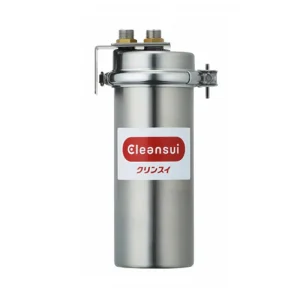
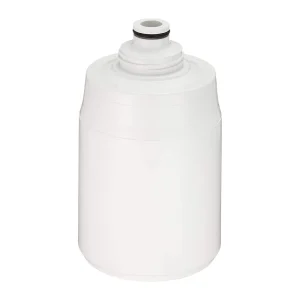
For offices with many employees or constant water use, Cleansui’s Commercial series is another option worth comparing. It is designed for business use and includes models based on Activated Carbon, models that use a Hollow Fiber Membrane, models that combine both, and models for reducing water hardness.
Does an Office Need a Commercial Water Purifier?
Not every office needs a commercial water purifier. For a small office with only a few employees that uses filtered water just for drinking and doesn’t connect it to a coffee machine or ice maker, some types of home water purifiers may be enough. But as the number of users grows, daily water use rises, or there is equipment that uses water continuously, a commercial water purifier becomes the more suitable choice.
The key difference is Capacity and Flow Rate. Commercial purifiers are designed to handle larger volumes of water and can be installed to supply various equipment, such as water dispensers, coffee machines, cold water machines and ice makers.
So when deciding to buy a water purifier for the office, look at how heavily the office’s water system is used.
Which Offices Should Use a Commercial Water Purifier?
Offices with many employees and heavy daily water use should give a commercial system particular consideration. Examples include companies with 50–100 or more employees, a large pantry, several coffee machines, water dispensers in several locations, or food preparation in the office.
Another case is an office where a lot of water is used at the same time, such as in the morning when employees arrive and all use the coffee machine at once, or at lunchtime when water is used for drinking and cooking simultaneously. A commercial system also suits offices that want to connect the filtration system directly to equipment, instead of using a small purifier installed only at the faucet.
Commercial systems can be used with water dispensers, coffee makers, cooking, water coolers or chillers, and ice makers, so they can be adapted in many ways for offices with a pantry or a beverage service area.
Which Purifier Should an Office of 10, 30, 50 or 100 People Choose?
Headcount is important information, but you shouldn’t match the number of people directly to a purifier model, because every office uses water differently.
For example, a 30-person office where everyone drinks 2 cups of coffee a day and there’s an ice maker may use more water than a 50-person office with just one drinking-water station.
So assess at least these 4 things:
- The number of employees who use the water regularly
- The amount of water used per day
- Peak water-use times
- The equipment that needs to be connected to the filtration system
If the water is mainly for drinking, the volume needed may not be very high. But once coffee machines, ice makers and a food prep area are added, water use climbs quickly. So a 20-person office doesn’t automatically call for a particular size of purifier, and a 100-person office doesn’t always need the largest one.
What Should You Look for in an Office Water Purifier?
Before choosing a model, consider at least 6 key factors.
1. Number of Users
Headcount helps you make a rough estimate of water use, but it should be combined with data on actual water use.
2. Daily Water Use
Look at both average water use and peak times, because an office may not use water evenly throughout the day.
3. Flow Rate
Flow rate is very important, especially in offices where several people use water at the same time.
4. Cartridge Capacity
A higher capacity lets the cartridge handle more water and may reduce how often you need to replace it.
5. Source Water Quality
Find out what the main problem with your water is, such as chlorine, odor, turbidity or hardness, because each type of cartridge is designed for a different purpose.
6. Connected Equipment
If you want to supply water to coffee machines, ice makers or water dispensers, check those machines’ requirements as well.
Cleansui Commercial Models for Offices Compared
Cleansui offers 6 commercial water purifiers in the MP02 family, each with a different purpose, from filtering out turbidity and contaminants to reducing chlorine and hardness.
| Model | Cartridges | Filtration capacity | Flow rate | Best for |
|---|---|---|---|---|
| MP02-1 | UMM0050 | 55,000 L | 10 L/min | Reduces bacteria and turbidity without removing chlorine |
| MP02-2 | UMC2100 | 100,000 litres | 10 L/min | Drinking water, beverages, food and equipment |
| MP02-3 | UMC2150 | 150,000 litres | 10 L/min | Offices or businesses with high water use |
| MP02-4 | UMC2050 | 50,000 litres | 8 L/min | Drinking water, food and beverages that need multi-stage filtration |
| MP02-5 | USC-5 | 5,000 litres | 5 L/min | Reduces hardness and helps deal with scale |
| MP02-6 | USC-6 | 3,000 litres | 5 L/min | Reduces hardness where installation space is limited |
Is the Cleansui MP02-2 Right for a Typical Office?
For offices that want a water purifier for drinking, making coffee and general use, the MP02-2 is one of the models worth considering.
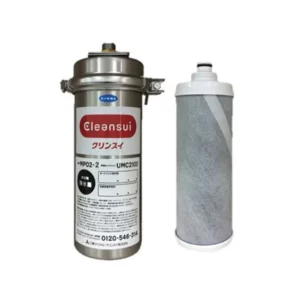
The MP02-2 uses the UMC2100 Activated Carbon cartridge and has a filtration capacity of 100,000 liters. It is the standard model for drinking water, cooking water and water supplied to equipment, and it can also reduce chlorine in tap water.
This matters for offices with a pantry that use a coffee machine regularly, because the system isn’t designed only for drinking water; it can also supply water to equipment. If your office doesn’t have many employees but wants a commercial system that handles a variety of uses, the MP02-2 is a good model to start comparing.
Cleansui MP02-3 for High-Volume Offices
If your office has many employees or uses water at several points, the MP02-3 is another model to consider.
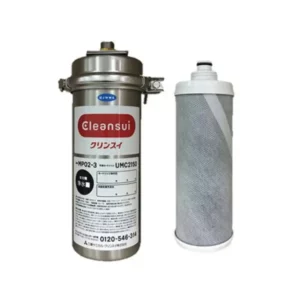
The MP02-3 uses the UMC2150 Activated Carbon cartridge and has a filtration capacity of 150,000 liters, the highest in the MP02 family according to Cleansui.
Its flow rate is 10 L/min, making it well suited to systems that need to handle heavy water use.
Large offices with several pantries, or that use water for coffee machines and ice makers, can compare the MP02-3 with the MP02-2; the main difference is cartridge capacity. However, a higher capacity doesn’t mean it suits every office. If actual water use isn’t very high, choosing the MP02-3 may not bring enough extra benefit to justify the system cost.
Cleansui MP02-4 for Offices Focused on Drinking Water Quality
If your office’s priority is the drinking water itself, the MP02-4 is another model to consider.
The MP02-4 uses the UMC2050 cartridge, which combines Activated Carbon and a Hollow Fiber Membrane to reduce chlorine, bacteria and turbidity. It is suitable for drinking water as well as water for cooking and for supplying equipment.
Its filtration capacity is 50,000 liters and its flow rate is 8 L/min. Compared with the MP02-2 and MP02-3, the MP02-4 has a lower capacity but a different filtration system, so don’t choose on capacity figures alone. For offices that want a drinking-water filtration system that deals with chlorine, turbidity and bacteria, as specified by the manufacturer, the MP02-4 belongs on the comparison list.
What Kind of Office Is the MP02-1 For?
The MP02-1 uses the UMM0050 Hollow Fiber Membrane cartridge and has a filtration capacity of 55,000 liters.
What sets it apart from the MP02-2 and MP02-4 is that the MP02-1 reduces bacteria and turbidity but does not remove chlorine, so the water still benefits from its residual chlorine.
So the MP02-1 shouldn’t be chosen just because of its high capacity; choose it when its filtration characteristics match what your office needs. If your office wants to reduce chlorine to improve the taste and smell of water for drinking or making coffee, the MP02-2 or MP02-4 may be a better fit.
Which Water Purifier Should an Office with a Coffee Machine Choose?
A coffee machine is one reason an office should think about its filtration system as more than just drinking water for employees. Besides the volume of water used, you also need to consider water quality and the requirements of each coffee machine model.
The Commercial series can be used with coffee machines, and the MP02-2 is suitable for drinking water, cooking water and water supplied to equipment. If your office has only one coffee machine and not many users, the largest system may not be necessary. But if you have a coffee corner that brews a lot of coffee every day, assess both water volume and Flow Rate.
Another point not to overlook is water hardness, because different coffee machine models may have different requirements. If your office is in an area with very hard water, assess hardness separately from chlorine reduction.
How Should an Office with an Ice Maker Choose?
An ice maker is another piece of equipment that uses water continuously. Commercial systems can be used with ice makers; in that case, also check the ice maker manufacturer’s requirements, especially for flow rate, water quality and hardness.
If the main problem is chlorine and odor, you can consider an Activated Carbon system such as the MP02-2 or MP02-3. But if you have hard water or scale, a hardness-reduction system may be something else to consider, because it does a different job from Activated Carbon.
Office Has Hard Water: Should You Choose the MP02-5 or MP02-6?
If your office only has drinking-water points, hard water may not be as big an issue as it is for offices with coffee machines, water heaters or other heated equipment.
Cleansui offers the MP02-5 and MP02-6, filter systems that also reduce water hardness, using the USC-5 and USC-6 cartridges respectively. The manufacturer specifies them for preventing scale in steam-generating equipment such as steam ovens, steamers and humidifiers; for coffee machines and electric water heaters, it recommends the activated-carbon MP02-2 or MP02-3.
The USC-5 has a filtration capacity of 5,000 liters, while the USC-6 has a filtration capacity of 3,000 liters.
So these two models shouldn’t be compared with the MP02-2 or MP02-3 on capacity figures alone, because the systems serve different purposes. If your office hashard water problems, start by checking the water quality and the equipment that uses water before deciding whether you need a hardness-reduction system.
Where Should an Office Water Purifier Be Installed?
Where to install it depends on which points need filtered water. If you need drinking water at just one point, the system can be installed in the pantry or at the main water point. But if you need to supply water to coffee machines, ice makers or water dispensers in several locations, you may need to design the piping to suit how the water is used.
Commercial systems can be installed in various ways, including horizontally, and in some configurations two units can be connected together. So offices with several water points should assess the piping and installation location before choosing a purifier.
How Much Capacity Does an Office Water Purifier Need?
There’s no single number that works for every office. What you should do is estimate your actual water use, for example:
Daily water volume × days of use per year = estimated annual water volume
Then compare that figure with the cartridge’s capacity. For example, if an office draws about 300 liters a day from the filtration system and works 250 days a year, it uses about 75,000 liters a year.
In this case, a 100,000-liter cartridge may be a better fit than a 150,000-liter one, unless other factors call for higher capacity. But this figure is only a rough estimate, because actual cartridge life also depends on water quality and the conditions set by the manufacturer.
Cartridge Capacity or Flow Rate: Which Matters More?
Both matter, but they answer different questions. Capacity tells you how much water the cartridge can handle under the specified conditions. Flow Rate tells you how fast the system can deliver water.
For example, the MP02-2 has a filtration capacity of 100,000 liters and a flow rate of 10 L/min, while the MP02-4 has a filtration capacity of 50,000 liters and a flow rate of 8 L/min.
If your office uses water at several points at once, Flow Rate may matter more than simply having a high capacity.
How Should You Calculate the Cost of an Office Water Purifier?
When choosing an office water purifier, think in terms of long-term cost, not just the purchase price. The main costs to factor in are:
Price of the unit
— the upfront cost.
Cartridge costs
— these recur, so check the price of the cartridge for the model you choose before deciding.
How often cartridges need replacing
— calculate this from the water you actually use, not just from elapsed time.
Installation cost
— especially for offices that need pipes run to several points.
Maintenance costs
— including checks of the system and related equipment.
For example, choosing the MP02-3, with its 150,000-liter capacity, may mean replacing cartridges less often than with a lower-capacity model. But if your office uses only 20,000–30,000 liters a year, that very high capacity may not be put to full use. So base your calculation on your office’s actual use.
Which Water Purifier Is Best for the Office? A Summary by Use Case
If you need a purifier for a typical office that uses water for drinking and beverages, you can start by considering the MP02-2, which uses Activated Carbon and has a filtration capacity of 100,000 liters.
For a large office or one with high water use, the MP02-3 is a model worth comparing, because its filtration capacity of 150,000 liters is the highest in the MP02 family.
If you want a system that uses both Activated Carbon and a Hollow Fiber Membrane for drinking water, food and equipment, the MP02-4 is another option to consider, with a filtration capacity of 50,000 liters.
If your office has turbidity problems and wants to keep the residual chlorine, the MP02-1 has the right characteristics for that purpose, with a filtration capacity of 55,000 liters.
If the main problem is hard water and scale, consider the MP02-5 or MP02-6, filtration systems designed specifically to reduce hardness.
Which Water Purifier Is Best for the Office?
Don’t choose an office water purifier on headcount alone. Look at water use, water quality, Flow Rate, cartridge capacity and the equipment that will be connected to the system.
A small office with few users that uses water only for drinking may not need a large commercial system. But as water use grows, or once there are coffee machines or ice makers, or water has to be supplied to several points, a commercial system becomes more suitable.
With Cleansui Commercial, the choices break down fairly clearly:
- MP02-1 — built around a Hollow Fiber Membrane; reduces bacteria and turbidity without removing chlorine.
- MP02-2 — built around Activated Carbon; suits drinking water, cooking water and water supplied to equipment, with a filtration capacity of 100,000 liters.
- MP02-3 — uses Activated Carbon like the MP02-2 but raises capacity to 150,000 liters; suits high water use.
- MP02-4 — uses Activated Carbon + Hollow Fiber Membrane with a filtration capacity of 50,000 liters; suits drinking water, food and supplying water to equipment.
- MP02-5 and MP02-6 — filtration systems with hardness reduction, suited to offices that need to deal with hard water and scale.
So if you’re looking for an office water purifier, the first step before choosing a model is to gather data on your office’s actual water use, then compare it with the characteristics of each system.
For more details on Cleansui water purifiers for business, see Cleansui Commercial water purifiers from Waterclick
Read more: Which Cleansui Water Purifier Is Best for Restaurants?
FAQ: Office Water Purifiers
Does a Small Office Need a Commercial Water Purifier?
Not always. If you don’t have many employees and use filtered water only for drinking, some types of home purifiers may be enough. But if you use a lot of water or need to connect to a coffee machine, ice maker or water dispenser, you should also consider a commercial system.
Which Water Purifier Model Suits an Office of 50 People?
It can’t be decided from headcount alone. Look at actual water use, the number of water points and the equipment that needs to be connected to the system. For general use, the MP02-2 is one of the models you can compare, while offices with high water use can also consider the MP02-3.
Can an Office Water Purifier Be Used with a Coffee Machine?
Cleansui’s commercial systems can be used with coffee machines. Just check the Flow Rate, water quality and the requirements of that coffee machine model as well.
Can an Office Water Purifier Be Used with an Ice Maker?
Commercial systems can be used with ice makers, but check each ice maker model’s requirements for water quality and flow rate before installation.
What’s the difference between the MP02-2 and MP02-3?
Both models use Activated Carbon, but the MP02-2 uses the UMC2100 cartridge with a filtration capacity of 100,000 liters, while the MP02-3 uses the UMC2150 with a filtration capacity of 150,000 liters. So the main difference is cartridge capacity and how much water use each can handle.
How does the MP02-4 differ from the MP02-2?
The MP02-2 uses Activated Carbon, while the MP02-4 combines Activated Carbon with a Hollow Fiber Membrane. The MP02-4 has a filtration capacity of 50,000 liters and can reduce chlorine, bacteria and turbidity.
Which Model Should an Office with Hard Water Choose?
Consider the MP02-5 or MP02-6, systems designed specifically with a hardness-reduction function. They use the USC-5 and USC-6 cartridges respectively.
When Should an Office Water Purifier’s Cartridge Be Replaced?
It depends on the model, the amount of water used and the manufacturer’s conditions. Don’t go by the number of months alone; compare your actual water use with the filtration capacity of each cartridge model.