In a restaurant, water isn’t just for drinking. It’s part of cooking, prepping ingredients, making drinks, making ice and washing equipment, and it may also be fed into various appliances around the restaurant. So choosing a water purifier for a restaurant means looking beyond the question of which model filters water the cleanest. What matters more is what the restaurant uses water for, how much it uses, what problems the source water has, and what kind of equipment the water needs to supply.
For example, a small restaurant that uses water for drinking and cooking may need a different system from a large restaurant with an ice maker, a coffee machine and many water points. Likewise, if the restaurant is in a hard-water area, a purifier that focuses only on reducing chlorine may not solve the problem of scale in its equipment.
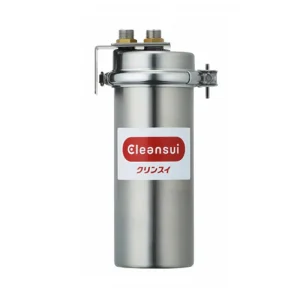
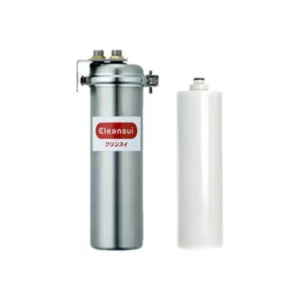
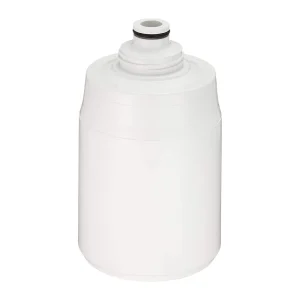
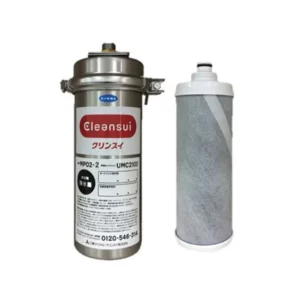
Cleansui offers a Commercial line of water purifiers designed specifically for business use, ranging from Hollow Fiber Membrane systems, Activated Carbon systems and systems that combine Activated Carbon with Hollow Fiber Membrane, to systems that filter water and reduce its hardness at the same time. Models MP02-1 through MP02-6 let you choose according to how you use water.
This article looks at which Cleansui model to choose as a restaurant water purifier and what kind of use each model suits, so you can better match the system size and cartridge type to your restaurant.
Why Should Restaurants Care About Water Purifiers?
Water is an ingredient used at almost every stage in a restaurant, from prepping ingredients and cooking to making drinks. If the water has a chlorine smell or an unpleasant taste, it can affect the customer experience, especially at places with drink menus or dishes that use water directly as an ingredient.
Water is also fed into equipment such as coffee machines, ice makers, water heaters and cooking appliances, where water quality and hardness can be linked to scale building up inside. That’s why choosing a water purifier for a restaurant means weighing three things together:
- The water quality you need
- How much water the restaurant uses
- The equipment that needs water from the filtration system
Only once you know these three things should you choose a water purifier model.
Should Restaurants Use a Commercial Water Purifier or a Regular One?
Not every restaurant needs a commercial water purifier. But as water use grows, a regular home purifier may fall short on capacity and flow rate. Cleansui’s commercial water purifiers are designed for business use and can be used for drinking water and cooking, as well as for supplying water to equipment such as coffee machines and other appliances that need water, depending on the installation.
So what you should look at isn’t just the size of the restaurant, but how much water it actually uses. A small restaurant that uses filtered water at just one point may not need a large system, while restaurants with several branches, a large kitchen, a high volume of drinks, or many points drawing water at the same time should take a more serious look at a commercial system.
What Should You Look for in a Restaurant Water Purifier?
Before choosing a Cleansui model, gather at least five pieces of information about your restaurant.
1. What Is the Water Used For?
Be clear about what the filtered water will be used for:
- Drinking
- Cooking
- Prepping ingredients
- Making coffee
- Making drinks
- Making ice
- Supplying various appliances
This matters because each use may have different water-quality requirements.
2. How much water do you use per day?
Estimate both your average use and your peak-use periods, because restaurants can have clear peak times, such as around lunch and in the evening.
3. What Problems Does Your Source Water Have?
Check whether the main problem is chlorine, odor, turbidity, certain contaminants, or hard water.
4. What Flow Rate Do You Need?
If several points draw water at the same time, flow rate is just as important as cartridge capacity.
5. What Equipment Is Connected to the System?
In particular, coffee machines, ice makers, water heaters, or water supply systems with specific requirements.
Comparing Cleansui Commercial Models for Restaurants
Cleansui currently offers Commercial models MP02-1 through MP02-6, each with different technology and a different purpose.
| Model | Cartridges | Capacity | Flow Rate | Main system | Best for |
|---|---|---|---|---|---|
| MP02-1 | UMM0050 | 55,000 L | 10 L/min | Hollow Fiber Membrane | Reduces turbidity and some bacteria |
| MP02-2 | UMC2100 | 100,000 litres | 10 L/min | Activated Carbon | Drinking water, food, beverages |
| MP02-3 | UMC2150 | 150,000 litres | 10 L/min | High-capacity Activated Carbon | Businesses that use a lot of water |
| MP02-4 | UMC2050 | 50,000 litres | 8 L/min | Activated Carbon + Hollow Fiber Membrane | Drinking water, food, beverages |
| MP02-5 | USC-5 | 5,000 litres | 5 L/min | Resin + Activated Carbon | Reduces hardness and scale |
| MP02-6 | USC-6 | 3,000 litres | 5 L/min | Resin + Activated Carbon | Compact hardness reduction |
Cartridge capacity figures are from Cleansui Official: MP02-1 uses UMM0050, with a capacity of 55,000 liters; MP02-2, 100,000 liters; MP02-3, 150,000 liters; MP02-4, 50,000 liters; MP02-5, 5,000 liters; and MP02-6, 3,000 liters.
Read more: Which Cleansui Water Purifier Is Best for Your Business?
What Kind of Restaurant Is Cleansui MP02-2 Right For?
If your restaurant needs a filtration system for drinking water, cooking water and supplying water to equipment, MP02-2 is one of the first models to compare.
MP02-2 uses the UMC2100 cartridge, an Activated Carbon system with a filtration capacity of 100,000 liters and a flow rate of 10 L/min. It can reduce chlorine in tap water and is the standard model for drinking water, cooking water and water supplied to equipment. That makes it a good fit for restaurants that want to improve their water, focusing on chlorine, odor and water quality for general use.
For example, a restaurant with a kitchen and drinks service but no obvious hard-water problem might start by comparing MP02-2 with MP02-4.
Cleansui MP02-3 Suits Restaurants That Use a Lot of Water
If your restaurant uses a lot of water, focus on cartridge capacity and Flow Rate.
MP02-3 uses the UMC2150 cartridge, a high-capacity Activated Carbon cartridge with a filtration capacity of 150,000 liters, the highest in the Commercial MP02 series according to Cleansui Official.
Its flow rate is 10 L/min, which suits systems that need to supply water continuously.
That makes MP02-3 a good fit for restaurants with high water use, such as large restaurants, kitchens that produce food in volume, or places serving both food and drinks that want to change cartridges less often.
That said, high capacity doesn’t mean MP02-3 suits every type of restaurant. If a restaurant doesn’t use much water, a capacity of 150,000 liters may be more than it really needs.
Cleansui MP02-4 Suits Restaurants Focused on Drinking Water and Water Quality
MP02-4 is another model worth a look for restaurants, because its filtration system uses Activated Carbon + Hollow Fiber Membrane together. This model can reduce chlorine, bacteria and turbidity, and it suits drinking water, cooking water and water supplied to equipment. The UMC2050 cartridge has a filtration capacity of 50,000 liters, and the system’s flow rate is 8 L/min.
So MP02-4 doesn’t compete with MP02-3 on how many liters it can filter; its strength lies in how it filters. If your restaurant wants a system that does more than reduce chlorine and includes a Hollow Fiber Membrane as part of the filtration, MP02-4 is a model you should compare.
How Do MP02-2 and MP02-4 Differ?
This is a pair restaurants should weigh up, because both models can be used for drinking water and cooking but use different technologies.
MP02-2 mainly uses Activated Carbon, with a filtration capacity of 100,000 liters and a flow rate of 10 L/min.
MP02-4 uses Activated Carbon together with Hollow Fiber Membrane, with a filtration capacity of 50,000 liters and a flow rate of 8 L/min.
So if your restaurant prioritizes water volume and needs high capacity, MP02-2 has the stronger numbers. But if you want a filtration system that combines Activated Carbon and Hollow Fiber Membrane, MP02-4 is the better fit in terms of filtration technology. Don’t decide on capacity alone.
MP02-3 or MP02-4: Which Should You Choose?
MP02-3 and MP02-4 are another pair that often get compared, because each has strengths in a different area.
MP02-3 has a capacity of 150,000 liters and a Flow Rate of 10 L/min, making it suitable for businesses that use a lot of water.
MP02-4 has a capacity of 50,000 liters and a Flow Rate of 8 L/min, but it uses Activated Carbon together with Hollow Fiber Membrane, and according to Cleansui it suits drinking water, cooking and supplying water to equipment.
If your restaurant uses a very large amount of water and wants to change cartridges less often, MP02-3 is the model to compare. But if your restaurant cares more about how the water is filtered than about capacity, MP02-4 is another interesting option.
Which Cleansui Model Should a Restaurant with a Coffee Machine Choose?
Many restaurants don’t sell just food; a coffee corner or drinks are another main source of revenue, so the water system has to serve both the kitchen and the coffee machine. As for using Cleansui’s commercial water purifiers with a coffee machine, MP02-2 is listed as a model for drinking water, cooking water and water supplied to equipment.
So restaurants with a coffee machine can start by comparing MP02-2 and MP02-4.
However, you should also check the requirements of your coffee machine model, especially regarding water hardness, because reducing chlorine and reducing hardness are two different things. If your restaurant has scale problems in its coffee machine or heated equipment, choosing MP02-2 or MP02-4 alone may not solve the hardness problem.
What Kind of Water Purifier Should a Restaurant with an Ice Maker Choose?
An ice maker uses water continuously, and water quality matters both for how the machine runs and for the quality of the ice. When using a commercial system with an ice maker, you can compare MP02-2, MP02-3 or MP02-4 based on your water quality and how much water you use.
If you want to reduce chlorine and odor, an Activated Carbon system like MP02-2 or MP02-3 is worth considering. But if you want a system that combines Activated Carbon and Hollow Fiber Membrane, MP02-4 is another option.
However, if your ice maker has specific hardness requirements, check its manual before choosing a filtration system, as you may need to consider an additional hardness-reduction system.
Which Cleansui Model Should a Restaurant with Hard Water Choose?
Hard water is a different problem from chlorine or odor, because its key components are minerals such as calcium and magnesium, and it can be linked to scale forming in equipment that uses water and heat. For this case, Cleansui offers MP02-5 and MP02-6, filtration systems designed specifically to reduce hardness as well.
MP02-5 uses Cation Exchange Resin together with Activated Carbon and has a filtration capacity of 5,000 liters. It can help prevent scale from calcium and magnesium building up in equipment such as steam ovens and steam convection ovens.
MP02-6 works on the same principle but is a compact model, with a filtration capacity of 3,000 liters.
So if your restaurant has scale problems, look at MP02-5 and MP02-6 separately from MP02-2 and MP02-3, because they are systems with different purposes.
How do the MP02-5 and MP02-6 differ?
Both models are filtration systems that also reduce hardness, but they differ in capacity and size.
| Features | MP02-5 | MP02-6 |
|---|---|---|
| Cartridges | USC-5 | USC-6 |
| Capacity | 5,000 litres | 3,000 litres |
| Main system | Cation Exchange Resin + Activated Carbon | Cation Exchange Resin + Activated Carbon |
| Type | High capacity | Compact |
| Best for | Higher water use | Limited space / moderate water use |
Cleansui MP02-5 is a high-capacity hardness-reduction system, and MP02-6 is a compact model for the same kind of use.
Which Cleansui Model Is Best for a Small Restaurant?
A small restaurant shouldn’t choose based on the number of tables alone, but on how much water it actually uses. If the purifier is mainly for drinking water and cooking, and there’s no hard-water problem, MP02-2 is one of the first models to consider, as it is the standard model using Activated Carbon, with a capacity of 100,000 liters.
If you want an Activated Carbon + Hollow Fiber Membrane system, MP02-4 is another option, with a capacity of 50,000 liters. But if your restaurant has hard water or scale in its equipment, consider MP02-5 or MP02-6 instead of choosing based only on the capacity of MP02-2 or MP02-3.
Which Cleansui Model Is Best for a Large Restaurant?
For a large restaurant, the key factors are water volume and the number of water points. If you use a lot of water, MP02-3, with a capacity of 150,000 liters and a Flow Rate of 10 L/min, is a model to compare.
If you want a system that combines Activated Carbon and Hollow Fiber Membrane, MP02-4 is another interesting option.
If your restaurant has a kitchen, drinks, an ice maker and a coffee machine, you may not need the same system at every point, because each piece of equipment can have different water requirements. Designing separate systems for each point of use may suit you better than using one purifier for the whole restaurant.
Should a Restaurant Use One Water Purifier or Several?
A small restaurant with just one water point may be able to design its system around a single purifier set, but a large restaurant with a kitchen, a drinks station, an ice maker and several service points may need separate systems for each type of use.
For example, one system for drinking water and drinks, and another for equipment with hard-water problems. The advantage of separate systems is that you can match the filtration technology to each problem, without needing a purifier with more capability than necessary at every point.
How to Size a Water Purifier for a Restaurant
Sizing a purifier should start with estimating how much water you actually use. The basic formula for sizing a water purifier is:
Water used per day × number of days open = water used per year
For example, if your restaurant runs about 300 liters/day through its filtration system and is open 300 days/year, it will use about 90,000 liters a year.
Compared with each model’s capacity, MP02-2, at 100,000 liters, can handle that figure in terms of capacity, while MP02-3 has a capacity of 150,000 liters.
But this calculation is only a starting point, because you should also take into account peak demand, Flow Rate, source water quality and the manufacturer’s conditions.
Why Do Cartridge Capacity and Flow Rate Matter for Restaurants?
These two figures answer different questions.
Cartridge capacity tells you how much water the cartridge can handle under specified conditions.
Flow Rate tells you how fast the system can deliver water.
For example, MP02-3 has a capacity of 150,000 liters and a Flow Rate of 10 L/min, while MP02-4 has a capacity of 50,000 liters and a Flow Rate of 8 L/min.
So a restaurant that draws water at several points at once shouldn’t look at capacity alone; it also needs a flow rate that’s sufficient for the system.
How Should Restaurants Calculate Water Purifier Costs?
The cost of a restaurant water purifier isn’t just the purchase price of the unit. You should calculate the total cost, including:
- Price of the unit
- Cartridge costs
- How often cartridges need replacing
- Installation and plumbing costs
- Cost of connection fittings
- Maintenance costs
- Actual water use
For example, MP02-3 has a capacity of 150,000 liters, but if your restaurant uses only 20,000 liters a year, that very high capacity may not deliver the value it should.
If your restaurant uses a lot of water, higher capacity can help reduce how often you change the cartridge. So calculate cost against the amount of water you actually use, rather than looking at the unit price alone.
Do Restaurant Water Purifiers Need Electricity?
The MP02 series of commercial water purifiers doesn’t rely on electricity for the filtration process, so it can be installed ahead of water points or equipment without needing a dedicated power supply for the purifier itself. However, an actual installation still has to take water pressure, plumbing and the requirements of the downstream equipment into account.
Cleansui Water Purifiers for Restaurants: Which Model?
Your choice can be summarized by type of use as follows:
| Restaurant type / problem | Models to compare | Reason |
|---|---|---|
| General restaurant wanting to reduce chlorine and odor | MP02-2 | Activated Carbon, 100,000 L |
| Restaurant with high water use | MP02-3 | Activated Carbon, 150,000 L |
| Focus on drinking water + food + want Hollow Fiber | MP02-4 | Activated Carbon + Hollow Fiber, 50,000 L |
| Turbidity problems / want Hollow Fiber | MP02-1 | Hollow Fiber, 55,000 L |
| Hard water and scale problems | MP02-5 | Hardness reduction system, 5,000 L |
| Hard water + limited installation space | MP02-6 | Compact hardness reduction system, 3,000 L |
This table is a starting point for comparison, not a fixed match between models and restaurant types, since every restaurant’s water quality, water use and equipment are different.
Which Cleansui Water Purifier Is Best for Restaurants?
Choose a restaurant water purifier based on water quality + water use + points of use + the equipment connected to the system, not on cartridge capacity alone.
If your restaurant needs a standard system for drinking water, cooking water and supplying water to equipment, MP02-2 is one of the first models to consider. It uses Activated Carbon and has a filtration capacity of 100,000 liters.
If your restaurant uses a lot of water and needs high capacity, MP02-3 offers a filtration capacity of 150,000 liters and a Flow Rate of 10 L/min.
If you want a system that combines Activated Carbon and Hollow Fiber Membrane for drinking water, cooking and supplying water to equipment, MP02-4 is the model to compare, with a filtration capacity of 50,000 liters.
If your main problem is turbidity and you want a Hollow Fiber Membrane system, MP02-1 is another option; Cleansui Official lists the capacity of UMM0050 at 55,000 liters. Restaurants with hard water and scale problems should look at MP02-5 or MP02-6, which are designed specifically as filtration systems that also reduce hardness.
So if you’re looking for a restaurant water purifier, don’t start by asking which model is best. Start by asking how your restaurant uses water and what water problems you need to solve. Then choose the Cleansui model whose technology, capacity and Flow Rate best fit your restaurant’s system.
FAQ: Restaurant Water Purifiers
Which Water Purifier Should a Restaurant Use?
It depends on how you use it. If you want to reduce chlorine and use the water for drinking or cooking, MP02-2 is a model to compare. If you use a lot of water, MP02-3 has a higher capacity. MP02-4 suits those who want Activated Carbon together with Hollow Fiber Membrane.
Does a Small Restaurant Need a Commercial Water Purifier?
Not always. Look at how much water you actually use and how many points of use you have. If your restaurant doesn’t use much water and has only one point of use, you may not need a large commercial system. But if you have a coffee machine or an ice maker, or use water continuously, you should consider a commercial system.
What’s the difference between the MP02-2 and MP02-3?
Both models use Activated Carbon, but MP02-2 has a filtration capacity of 100,000 liters, while MP02-3 has a filtration capacity of 150,000 liters. Both have a Flow Rate of 10 L/min.
How Do MP02-2 and MP02-4 Differ?
MP02-2 uses Activated Carbon, while MP02-4 uses Activated Carbon together with Hollow Fiber Membrane. MP02-2 has a capacity of 100,000 liters, while MP02-4 has a capacity of 50,000 liters.
Which Cleansui Model Should a Restaurant with a Coffee Machine Choose?
You can start by comparing MP02-2, MP02-3 and MP02-4, taking into account water quality, how much water you use and the requirements of your coffee machine model, especially regarding hardness.
Can a Restaurant Water Purifier Be Used with an Ice Maker?
Cleansui’s commercial systems can be used with ice makers, but check the water quality, Flow Rate and the requirements of your ice maker model before installation.
Which Model Should a Restaurant with Hard Water Use?
Consider MP02-5 or MP02-6, filtration systems that also reduce hardness. They use Cation Exchange Resin together with Activated Carbon and are designed to help reduce scale problems in equipment that uses water and heat.
How do the MP02-5 and MP02-6 differ?
MP02-5 has a filtration capacity of 5,000 liters and is the high-capacity model, while MP02-6 has a filtration capacity of 3,000 liters and is the compact model.
Do Cleansui Commercial Water Purifiers Need Electricity?
The MP02 system’s filtration process doesn’t need electricity, so it can be connected to water points or equipment without a dedicated power supply for the purifier itself.
When Should Cleansui Commercial Cartridges Be Replaced?
It depends on the model and how much water you use. For example, UMC2100 has a filtration capacity of 100,000 liters; UMC2150, 150,000 liters; UMC2050, 50,000 liters; UMM0050, 55,000 liters; USC-5, 5,000 liters; and USC-6, 3,000 liters. Always follow the replacement conditions for the model you actually use.